Posts

Key factors to consider when choosing borosilicate glass for your application

Image
Borosilicate Glass Tube: Borosilicate glass is a type of glass that is made with boron oxide as one of the main ingredients. It is known for its high resistance to thermal shock, making it a popular choice for use in laboratory equipment and other applications where the glass may be subject to sudden temperature changes. Borosilicate glass manufactured as well as supplied by one of the leading Borosilicate glass tube suppliers in India - Noble Glass Works, has a low coefficient of thermal expansion, which means that it expands and contracts very little when exposed to temperature changes. It is also highly resistant to chemical corrosion and has good optical clarity.   Borosilicate glass tubes are thin, cylindrical pieces of borosilicate glass that are used for a variety of purposes. They may be used as containers for liquids or gases, as connectors or conduits for fluid flow, or as structural elements in scientific instruments or other equipment. Borosilicate glass tubes are ...

How to differentiate between PTFE lined valve and PFA lined valve?

Image
The components of a lined ball valve include the body, stem, ball, seat, and lining.   High-quality PFA or PTFE is used to line the interior, and this provides good protection against chemical corrosion. This makes these valves suitable for particularly unpleasant tasks. These valves are widely popular as "Shut Off" because some kinds are manufactured with a free-floating design of the ball that favours Positive shut-off over the operating pressure range. As a result, these valves can be used in a variety of applications. Lined Ball Valve v/s Unlined Ball Valve: Similar in appearance to their unlined counterparts, lined ball valves are an economical choice for applications requiring long-term sealing and durability in harsh corrosive or chemical environments. They are suitable for use in control and shutdown applications due to their longevity, dependability, and performance even after repeated cycling.   They are suitable for automation since the ISO 5211 certified...

Industrial Purpose of Using Sight Glass

Image
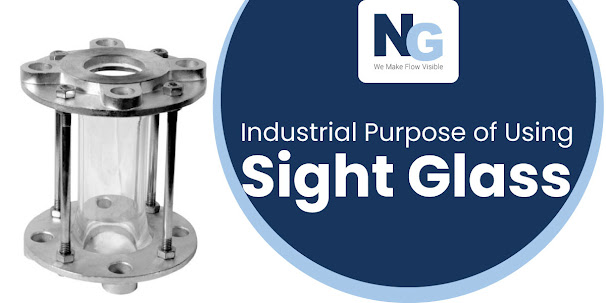
The goal of sight glass is to permit engineers as well as plant managers to inspect their systems without disturbing the inside environment. Sight glass, being widely popular as “Viewing glass” allows you to watch the levels of liquids or gases passing through a vital point of your design, monitor variations in pressure, and perform nearly any other function that sight glass windows may enable. Food processing, steam pipes, pharmaceutical processing, as well as chemical processing have become dependent on sight glasses as a result of their extensive application. Historically, sight glasses were made of a glass tube which was connected to an essential component of your system, such as a tank or gas intake. Modern industrial sight glasses are comprised of a glass disc that is fastened tightly somewhere between 2 frames of metal, by gaskets as well as bolts in order to maintain sanitary fittings standards. Typically, borosilicate glass or soda-lime glass is utilised, although stainless ...

Why is Borosilicate Glass the prime choice for various Industries?

Borosilicate Glass: The ingredients for making Borosilicate glass tube in India include soda ash, silica sand, boric oxide, as well as alumina. Because its melting point is higher than that of common glasses, borosilicate production necessitated the development of novel processes. Each project calls for a unique set of tools and techniques. Nonetheless, floating is a typical technique; it starts in an electric furnace where all the parts are melt until they gets transformed into a liquid material referred to as "glass melt," and it differs from drawn and blown techniques, in which the molten glass cools as it passes through moulds or air streams. Borosilicate glass can endure significant temperature variations, making it ideal for use in high-end kitchens, research facilities, and vineyards. Boron trioxide renders borosilicate so resistant to cracking under extreme temperature changes that it has been widely used for a number of years in a variety of commercial settings....

How does the Tank Sight Glass work?

Engineers and plant managers can use sight glass to peer into their systems without disturbing the delicate internal balance. You can use these "viewing glasses," as they are also known, to check on the flow of gases or gases through an important part of your design, observe any changes in pressure, or do anything else that conventional sight glass windows would make possible. Sight glasses' broad use has made them an integral part of many industries, from steam pipelines and chemical plants to pharmaceutical and food production facilities. Sight glasses used to be little more than a glass tube connected to a critical component of your setup, such as a gas inlet, and were typically quite basic in design. To ensure that the criteria of sanitary fittings are met, the glass disc in today's industrial sight glasses is securely fastened between two metal frames using bolts and gaskets. Soda-lime glass or borosilicate glass is commonly used for the glass, while stainless ...

Various Applications of Sight Glass

Image
The liquid in tanks: Sight glasses can be as basic as a glass or plastic tube with one end attached to the tank's base and the other to the tank's ceiling. When the sight glass is at the same level as the tank, everything is fine. However, modern float switches are used in numerous places where sight glasses were once used. Steam boilers: If the liquid poses a threat or is pressurised, then elaborate precautions must be taken. Since the water pressure and the steam pressure in a boiler are both constant, any fluctuation in the level of water will be reflected in the gauge. To avoid damage from scratching or impact and to provide protection to the operators in the event of a breakage, the transparent tube may be largely encased within a toughened glass or metal shroud. Noble Glass Works is the most reputed as well as a noted Sight Glass manufacturer in Gujarat. The water present in the tube acts as a magnifying glass, and the device's typically patterned backplate hi...

Choosing the right Sight Flow Indicator for your Application

Image
Process Control Devices is responsible for the production of a number of different sight glasses. Designed to display the inline flow of a variety of fluids, including liquids and gases, among other types of fluids. The double-paned sight glass in the pipeline enables the viewing of the movement of the fluid at any given moment. As a result of the fact that the glass does not react with virtually any kind of fluid and does not contaminate it, it can be used in almost any kind of engineering application. In order to inspect the process fluid and get a visual signal of the media as well as flow in pipes, companies make use of the sight flow indicator so that they can fulfil the requirements of a variety of applications. The double window sight glass is made up of two process flanges. Depending on the needs of the customer, the flange material might be stainless steel, mild steel, polypropylene, carbon steel, or may have a Teflon lining. Toughened borosilicate glass is another important t...